Thursday, February 21, 2019

Governor appoints Brett Busby to Texas Supreme Court

Originally published by Lowell Brown.

Governor Greg Abbott announced Thursday he has appointed former 14th Court of Appeals Justice Brett Busby to the Texas Supreme Court for a term set to expire on December 31, 2020. Busby’s appointment, which is subject to Senate confirmation, follows the retirement of Justice Phil Johnson in December.

Read the governor’s announcement.

Curated by Texas Bar Today. Follow us on Twitter @texasbartoday.


from Texas Bar Today https://ift.tt/2H2sC9d
via Abogado Aly Website

Gas Flaring in the Permian

Originally published by John McFarland.

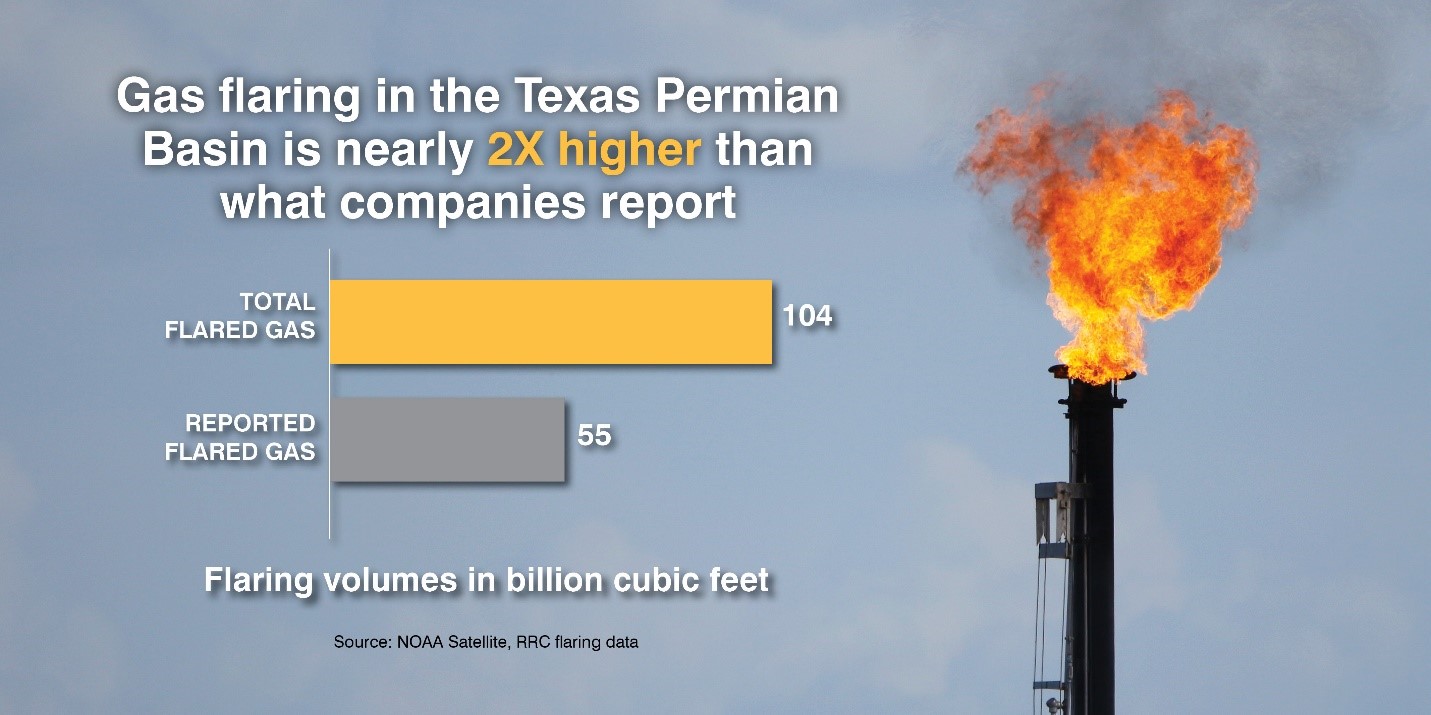
Last month the Environmental Defense Fund released an analysis of NOAA satellite data estimating volumes of gas flared in the Permian Basin in 2017. Its findings: operators report half of the amount of gas actually flared.

Flaring-graphic

104 Bcf of gas is enough to serve all needs of Texas’ seven largest cities – $322 million worth of gas. The State also does not collect severance tax on that gas.

Operators must obtain permits to flare gas and report volumes flared. The RRC has not denied any permits. Between 2016 and May 2018, the RRC issued more than 6,300 flaring permits in the Permian. Between 2008 and 2010, the RRC issued fewer than 600 flaring permits for all of the state.

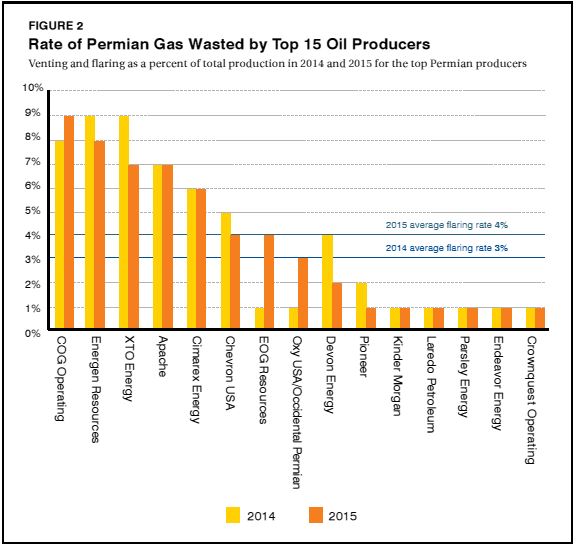
EDF’s analysis also compared the top 15 oil producers in the Permian (click on image to enlarge):

Operator-flaring-in-Permian

Last October S&P Global Market Intelligence issued an analysis of flaring in the Permian Basin and the Eagle Ford. It also relied on satellite data and a NOAA algorithm that estimates flared volumes. Its analysis concluded that in 2017 Texas operators flared 163 Bcf of gas, about 2.6% of the state’s natural gas production. NOAA data indicates that Operators may have flared nearly 1 Tcf of gas from 2012 to 2017. The analysis also remarked on the difference between reported volumes of flared gas in Texas – 1.6% of production in 2017 – and NOAA estimates of 2.6%. (S&P Global’s report online has a cool graphic showing rates of flaring over time on a map of Texas.)

In contrast, S&P Global found closer agreement between NOAA and state data in North Dakota, where the Bakken production occurs – but still under-reporting of flared volumes. North Dakota regulators have sought to reduce flaring and fine violators, planning to require producers who exceed allowed flaring levels of 15% of production to shut in their wells until pipeline infrastructure can be built to market the gas.

EDF’s report also analyzed flared gas on state-owned University Lands, more than 2 million acres in the Permian. University Lands collects royalties on flared gas. EDF concluded that UL has a lower rate of flaring on its wells – 2.75% – than the overall Permian average of 4.4%. A higher degree of lease management and the requirement to pay royalties on the gas flared likely correlated to better performance.

Both EDF and S&P Global concluded that state regulators should incorporate NOAA satellite data into their regulatory oversight to identify violators. EDF also recommended that operators be required to pay state severance tax on flared gas. EDF’s other recommendations included requiring best flaring technologies, eliminating the duration of flaring permits, and encouraging technologies that capture the gas onsite.

Yesterday the three commissioners of the Texas Railroad Commissioners, Ryan Sitton, Christi Craddick and Wayne Christian, appeared before the Texas Senate Natural Resources and Economic Development Committee and were questioned about these reports that methane emissions were “much higher than the EPA predicted in West Texas.” All said they did not believe those reports. Sitton said he thought the volumes reported to the RRC are “very close to accurate.” Craddick said she was “not sure if [the reports] are accurate or not.” Collin Leyden of EDF commented that the commissioners “seem to dismiss the reports on the grounds they believe that the data they have is correct. I did not hear any sort of technical analysis of the satellite data indicating they had found any sort of flaws or errors.”


Curated by Texas Bar Today. Follow us on Twitter @texasbartoday.


from Texas Bar Today https://ift.tt/2tw0naC
via Abogado Aly Website

The KonMari Method to Effective Law Firm Marketing

Originally published by Bruce Vincent.

There are many available tools for effectively marketing a law firm but one resource that’s all the rage but not might not immediately jump to mind is the popular KonMari lifestyle. The brainchild of Japanese organizing consultant Marie Kondo, KonMari essentially boils down to taking stock of everything you own and then eliminating whatever fails […]

The post The KonMari Method to Effective Law Firm Marketing appeared first on Muse Communications.

Curated by Texas Bar Today. Follow us on Twitter @texasbartoday.


from Texas Bar Today https://ift.tt/2H2sAhB
via Abogado Aly Website

Workers Paid with Gift Cards

Originally published by Thomas J. Crane.

Employers do some crazy things, sometimes. One employer in New Braunfels has been paying “volunteers” with gift cards and fabric. Quilt Haus and Way to Sew have been paying some workers with gift cards payable to the store itself. The workers would receive one gift card valued at $8 for each hour of work. The worker could then use the card to buy fabric. The store referred to the workers as “volunteers.” But, as I understand the Fair Labor Standards act, there is no such thing as a volunteer worker. If the employer accepts your work, then the employer must pay for it.

Apparently, some of the workers complained. Because, the Department of Labor investigated. DOL then found violations. And, now, DOL has now filed suit. See San Antonio Express News report.

It is not that hard to get legal advice about wages. The DOL and Texas Workforce Commission both provide free advice regarding how to pay employees. A person might have to wait on the phone a bit, but it is free. And, an employer can point to that advice later if the business is investigated. I expect these two businesses did not seek legal advice. This method of payment is nowhere close to kosher.

Curated by Texas Bar Today. Follow us on Twitter @texasbartoday.


from Texas Bar Today https://ift.tt/2tw0l2u
via Abogado Aly Website

Client Development Coaching: It should be a no-brainer

Originally published by Cordell Parvin.

You likely know I loved coaching lawyers, and when they tell me what they have achieved, it is even more fulfilling. Several lawyers I coached years ago are now top rainmakers or firm leaders in their law firms. Several groups of lawyers I coached still get together at their firm retreats.

Your law firm should consider client development coaching in 2019 for a variety of reasons.

  • Business Clients have changed.  Business clients are no longer local and no longer loyal. Many have moved work in-house and they have way more lawyers to choose from and way less time to choose.
  • Practicing law has changed. Lawyers have many more choices of client development activities and have way less time to do any of them. When there are lots of choices and less time to do what is chosen the natural thing to do is nothing.
  • Your lawyers have Less time. In 2019, in many firms, young lawyers are billing lots of hours and they want to spend more time with their families. How wisely they spend their personal time will determine the quality of their lives. How wisely they spend their non-billable time will determine the quality of their careers.
  • Many of your lawyers don’t know where to start. In many law firms, young lawyers were encouraged to work hard, do quality work, and not worry about client development. Those lawyers either never start client development efforts, or they start, get frustrated, and quit.

Coaching helps lawyers make the right choices, narrow their focus, and use their time wisely. Coaching also helps lawyers be accountable.

Why will client development coaching help create the next generation of rainmakers in your law firm?

First, your lawyers will own it. Lawyers do not want to be told what to do. They want to feel in control. In coaching your lawyers will get out of it what they choose to put into it. They get to choose.

Second, coaching focuses on your lawyers establishing and achieving their goals. Coaching provides both assistance and accountability.

Third, the coach will help your lawyers figure out what will work best for them. That means they will not waste time pursuing client development ideas that won’t work and your lawyers will less likely get frustrated in the process.


The post Client Development Coaching: It should be a no-brainer appeared first on Cordell Parvin Blog.

Curated by Texas Bar Today. Follow us on Twitter @texasbartoday.


from Texas Bar Today https://ift.tt/2GXOYIz
via Abogado Aly Website

Ongoing Struggle with Cell Phone GPS and Right to Privacy

Originally published by John Floyd.

Court Continue to Struggle with Cell Phone and Right to Privacy


Once considered a sacred cow, individual privacy has succumbed to governmental interference, especially in the area of how law enforcement cell phone technology to track and apprehend criminal suspects.


Cell site location information (“CSLI”) or global positioning system (“GPS”) real-time information can locate a cell phone within 5 to 10 feet of its location through identification information collected by multiple cell towers about the device. The National Association of Criminal Defense Lawyers’ (“NACDL”) primer on Cell Phone Location Tracking refers to this technique as “triangulation.”


A cell phone’s CSLI falls into two categories: “historical” or “prospective.”  Most often, however, CSLI falls in to the historical category while GPS real-time information falls into the prospective category.


The NACDL primer notes that law enforcement can use historical CSLI to connect a suspect to the location of a past crime allowing them to associate him or her to past incriminating events. Prospective location has a more immediate benefit—it allows law enforcement to trace the current whereabouts of a suspect in order to make an arrest.


The NACDL also instructs that federal law enforcement officials rely primarily on two statutes to secure an order of production against cell phone service providers to gain access to either CSLI or both GPS real-time information in order to track, locate, and/or incriminate an individual suspected of criminal activity. These statutes are:


  • 18 U.S.C. §§ 2701-2703 (Stored Communications Act) – deals primarily with historical information (records stored by cell phone service provider detailing past locations of the cell phone). An order for production under this statute requires a showing to a judge or magistrate that “specific and articulable facts” show that the information sought is “relevant and material to an ongoing criminal investigation.”
  • 18 U.S.C. §§ 3121-3127 (Pen/Trap Statute) – deals with prospective real-time location information (all cell site information after government granted authority to acquire it and “real time” information pinpointing the present location of the cell phone). An order for production under this statute requires the same standard as the Stored Communications Act but must also meet the Pen/Trap Statute’s requirement “that the information likely to be obtained is relevant to an ongoing criminal investigation being conducted by that agency.”


Texas’s version of these two federal statutes combined is Article 18.21 of the state’s Code of Criminal Procedure.


Expectation of Privacy in Texas


On January 16, 2019, the Texas Court of Criminal Appeals (“CCA”) issued an opinion in Sims v. State dealing with the Stored Communications Act and Article 18.21. The Sims case dealt with law enforcement using real-time location information to track the suspect’s cell phone by “pinging” it without a warrant. That prospective information allowed law enforcement to locate and arrest the suspect. Sims sought to suppress this prospective real-time information because the search violated the Fourth Amendment to the U.S. Constitution, the Stored Communications Act, and Article 18.21.


The CCA granted review in the Sims case to decide two issues:


  • Whether suppression is a remedy for a violation of the Stored Communications Act and Article 18.21; and
  • Whether a person is entitled to a reasonable expectation of privacy in real-time CSLI records stored in a cell phone’s electronic storage.


The CCA ruled that suppression is not a remedy for a violation of the Stored Communications Act and/or Article 18.21 unless that violation infringes upon the U.S. or Texas constitutions. As for the Fourth Amendment privacy issue, the Court concluded that under the facts of the Sims case the defendant did not enjoy an expectation of privacy to the real-time location information stored in his cell phone.


Last year the U.S. Supreme Court in Carpenter v. United States ruled that an individual has certain expectations of privacy in stored cell phone information equivalent to the Fourth Amendment protections against physical intrusions in other areas. Five justices in Carpenter, including the majority opinion written by Chief Justice Roberts, chose to use a “physical-trespass theory” over the historical “expectation-of-privacy theory” to conclude that “longer term GPS monitoring” could nonetheless violate an individual’s legitimate expectation of privacy “regardless [of] whether those movements were disclosed to the public at large.”


Expectation of Privacy Depends of Quantity of Information Searched, Seized


The Texas CCA pointed out that while Carpenter dealt with historical CSLI information, not GPS real-time information, the CCA nonetheless believes Carpenter applies to both historical and prospective (real-time) information. Against that constitutional backdrop, the CCA concluded in Sims:


“Whether a particular government action constitutes a ‘search’ or ‘seizure’ does not turn on the content of the CSLI records; it turns on whether the government searched or seized ‘enough’ information that it violated a legitimate expectation of privacy. There is no bright-line rule for determining how long police must track a person’s cell phone in real time before it violates a person’s legitimate expectation of privacy in those records. Whether a person has a recognized expectation of privacy in real-time CSLI records must be decided on a case-by-case basis.”


The CCA pointed out that this legal conclusion was based on the factual difference between Sims and Carpenter. Law enforcement in the Sims case accessed “three hours of real-time CSLI records” by pinging the defendant’s cell phone less than five times while law enforcement in Carpenter accessed more than seven days of CSLI from the cell phone service provider.


Chief Justice Roberts also confined the Carpenter ruling to the specific facts in that case as the Texas CCA did in Sims.


Thus, it appears to us that the two courts are saying that brief intrusions on historical CSLI and/or GPS real time information do not violate the expectation of privacy guaranteed by the Fourth Amendment but extended surveillance in either or both areas of information violates an individual’s privacy rights.


The post Ongoing Struggle with Cell Phone GPS and Right to Privacy appeared first on .

Curated by Texas Bar Today. Follow us on Twitter @texasbartoday.


from Texas Bar Today https://ift.tt/2TeH18M
via Abogado Aly Website

Reminder: Comments accepted on proposed advertising rules

Originally published by Staff Report.

The Committee on Disciplinary Rules and Referenda (CDRR) will continue to accept public comments concerning the proposed lawyer advertising rules through March 1, 2019. You can submit comments here.

Interested in law firm trade names? Take the CDRR’s poll.

Curated by Texas Bar Today. Follow us on Twitter @texasbartoday.


from Texas Bar Today https://ift.tt/2T6vp7G
via Abogado Aly Website