Friday, April 29, 2022

Will Captive Audience Meetings Become Unlawful at the NLRB

In a recent post on the Fisher Phillips blog, I and my colleagues examine this issue.

Here is the first paragraph:

The NLRB’s top prosecutor just issued a memo which seeks to bar employers from convening employee meetings on working time to address union representation unless they provide employees specific assurances that participation is completely voluntary. These so-called “captive audience” meetings are routinely conducted to educate employees – particularly in response to arguments advanced by organized labor outside the workplace – and have been a staple in the American workplace since Congress amended the labor laws to recognize employer free-speech rights almost 75 years ago. Although a handful of states have enacted statutes attempting to restrict such meetings, the April 7 memo from NLRB General Counsel Jennifer Abruzzo (formally known as GC Memo 22-04) represents an unprecedented development in the annals of modern labor law. What do employers need to know about this significant step – and what should they do about it?

The rest of the article is available here: https://www.fisherphillips.com/news-insights/nlrbs-top-sheriff-calls-for-abrupt-end-to-75-years-of-lawful-captive-audience-meetings.html

The post Will Captive Audience Meetings Become Unlawful at the NLRB appeared first on Texas Labor Law Blog.


from Texas Bar Today https://ift.tt/SuDymp3
via Abogado Aly Website

A Two For: substantial limitation on the major life activity of working and Morbid Obesity the Texas Approach

I had already gone through two drafts of putting this blog entry together when I saw that the United States Supreme Court came down with it decision in Cummings (we discussed the oral argument here). One thing Cummings shows me is that predicting the Supreme Court result from the oral argument is a fools errand. I will try to remember that the next time. The case will be my very next blog. In short, the majority opinion decides that emotional distress damages are simply not a part of the traditional calculus of contract damages and therefore, are not available under the Rehabilitation Act of 1973 as well as the Affordable Care Act. More on this next week or if I can swing it, later this week.


Today’s blog entry gets its origins from both a case in my pipeline and from me finishing a chapter on disability discrimination that will appear in the Rutter Group Federal Employment Law Litigation treatise later this year. So, the blog entry discusses two different concepts. First, does proving up a substantial limitation on the major life activity of working, which has customarily meant having to show that the plaintiff cannot do a broad range of jobs, survive the ADAAA? Second, does morbid obesity require an underlying physiological condition when claiming disability discrimination. As usual, the blog entry is divided into categories and they are: working at the major life activities; does morbid obesity require an underlying physiological condition in order to be considered a disability; Texas Tech University Health Sciences Center-El Paso v. Dr. Niehay facts; court’s reasoning that morbid obesity qualifies as an impairment in a regarded as claim even without evidence of an underlying physiological cause; court’s reasoning on the applicability of the catspaw theory; court’s reasoning that the lower court did not err in considering Texas Tech’s own personnel statements about what happened when the interim program director consulted Texas Tech University legal counsel; court’s reasoning that direct evidence existed; and thoughts/takeaways. Of course, the reader is free to focus on any or all of the categories.


I

Working as the Major Life Activity


In Sutton v. United Airlines the Supreme Court held that mitigating measures should be considered when deciding whether a person had a disability. That particular holding was overruled by the amendments to the ADA, the ADAAA. Sutton also said that to be substantially limited in the major life activity of working that you had to look at whether the individual could do a broad class of jobs. The question is whether after the amendments to the ADA does that principle still survive? The answer is confusing, especially if you do Boolean searching in a legal database as that will likely lead you one way that may not be accurate. What you do have to do is start with the case of Booth v. Nissan North America, 927 F.3d 387, 394 (6th Cir. 2019). Then, cite check, Sheppardize, or whatever you like to call it the section of Booth talking about how proving up working as the major life activity follows Sutton even after the ADAAA. When you do that, you find out that the EEOC also agrees that the analysis of the major life activity of working being substantially limited, which focuses on whether the individual can do a broad class of jobs, still survives even after the amendments to the ADA. See, EEOC Interpretive Guidance of title 1 of the ADA at 1630.2(j)(5) and (6). So, you have both case law as well as guidance from the EEOC itself talking about how the broad class of jobs is still the rule with respect to figuring out whether working as the major life activity is substantially limited. As such, if you are on the plaintiff side you definitely want to avoid alleging working as the major life activity if at all possible, a point which the EEOC makes in its guidance as well. If you do allege working as the major life activity and you do not have to, one wonders whether that wouldn’t give rise to a legal malpractice claim, and we discussed that possibility here.


II

Does Morbid Obesity Require an Underlying Physiological Condition in Order to Be Considered a Disability


The answer to this question entirely depends upon the jurisdiction you were in. At the federal level, the trend is very clear that morbid obesity requires an underlying physiological impairment in order to proceed with a disability discrimination claim. See here for example. However, many states have their own disability nondiscrimination laws and they are not necessarily tracking the federal trend. For example, we previously discussed how Washington has decided that morbid obesity is always a disability under Washington Law Against Discrimination. Recently, Texas has decided that under their disability nondiscrimination law, the Texas Commission on Human Rights Act law that morbid obesity does not require an underlying physiological impairment in a regarded as claim situation. Let’s take a look at the Texas decision, Texas Tech University Health Science Center-El Paso v. Dr. Niehay, here, decided on January 31, 2022, by the Court of Appeals of Texas.


III


Texas Tech University Health Science Center-El Paso v. Dr. Niehay Facts


The facts of this case are quite egregious and can be found in great detail in the opinion. Basically, you have a resident that weighed over 400 pounds. The program where she was doing a residency at did not appreciate that. She had a particular problem with the person who ran the residency program, an interim director. At one point, the interim director actually went into the University legal counsel’s office to figure out whether she could terminate the resident because of the plaintiff’s weight. The lawyer for the school said that she could not terminate based upon that reason because it would be discrimination. After hearing that, she repeated to the attorney that she believed that the resident was not performing well because of her weight and that she needed to find another reason to terminate her from the program. The University did not take steps to protect the information from when the program director consulted legal counsel when it was revealed what the nature of that conversation was at the program director’s deposition.


IV

Court’s Reasoning that Morbid Obesity Qualifies as an Impairment in a Regarded As Claim Even without Evidence of an Underlying Physiological Cause


  1. No dispute exists that plaintiff was morbidly obese.
  2. No dispute exists that her condition was transitory or minor.
  3. The Texas Commission on Human Rights Act defines a disability as a mental or physical impairment or being regarded as having such an impairment. Texas Labor Code Annotated §21.002(6).
  4. The Code of Federal Regulations as promulgated by the EEOC provided significant guidance to the interpretation of the Texas Commission on Human Rights Act.
  5. The relevant provisions in the Code of Federal Regulations define a physical or mental impairment as any physiological disorder or condition affecting one or more body systems. Those body systems might include the neurological, musculoskeletal, respiratory, cardiovascular, digestive, genitourinary, immune, circulatory, humic, lymphatic, skin, or endocrine system. 29 C.F.R. §1630.2(h)(1).
  6. While physiological disorder and physiological condition are not defined by the C.F.R., when the statute uses an undefined word, a court should apply the word’s common ordinary meaning.
  7. Webster’s defines physiology as the organic processes and phenomena of an organism or any of its parts of a particular bodily process.
  8. The word “condition,” when referring to a physical state includes, “a mode or state of being... proper or good condition (as for work or sports competition)... the physical status of the body as a whole... [Usually] used to indicate abnormality.” Morbid obesity meets these definitions.
  9. The Texas Court of Appeals cites to the Washington case that we discussed here.
  10. Plaintiff testified at her deposition that her morbid obesity is a contributing factor to cardiac issues and is also associated with metabolic syndrome, which includes hormonal imbalances, insulin resistance, and the potential to develop type II diabetes. She also testified that can affect activities such as walking, running, climbing, breathing and muscle function. Plaintiff and Amicus also directed the court to secondary medical authority viewing morbid obesity as a physiological disorder or disease without regard to its cause.
  11. Another Texas Court of Appeals has previously stated that obesity can be properly classified as a disability when it substantially affects the body system.
  12. In a regarded as claim, the plaintiff need not actually have the perceived impairment, rather plaintiff only needs to be regarded, whether it be correctly or incorrectly, as having it by the employer. It is illogical to suggest that a plaintiff must establish that the imagined impairment they are regarded as having by their employer-but don’t actually have-is also regarded by the employer as being caused by an imagined underlying physiological cause that they likewise don’t have. There is also no basis or authority for imposing that requirement on a portion of regarded as cases (where the plaintiff is shown to actually have the perceived impairment), but not others (where she isn’t).
  13. Texas Tech’s interpretation of the law makes no sense for another reason as well. That is, even if the employer did fabricate and imagine cause for the impairment that the person did not have, the specific cause they imagined would determine whether liability existed or not. For example, an employer deciding the employee was morbidly obese for psychological reasons could never be held liable for terminating the employee on that basis. Yet an employer who viewed the employee had being morbidly obese through no fault of their own-for physiological reason-would be subject to potential Texas Commission on Human Rights Act liability.
  14. The decision is limited to regarded as claims.
  15. It is possible that the defense may still prevail on the merits. For example, it might be able to show that the plaintiff was not qualified, especially since a person with a regarded as claim is not entitled to reasonable accommodations under the ADA as amended.


V

Court’s Reasoning on the Applicability of the Catspaw Theory


  1. Under the catspaw theory, a plaintiff need not show that the final, official decision-maker harbored a discriminatory animus toward her. Instead, the plaintiff may present evidence that a subordinate employee harbored such intent, and that the subordinate employee’s efforts led to a recommendation for termination, which the final decision-maker effectively rubber stamped. That is, federal courts will not blindly accept the titular decision-maker at the true decision-maker. Rather the question is whether the worker possess leverage, or exerted influence over the titular decision-maker.
  2. Another way to look at it is if a supervisor performs an act motivated by unlawful animus intended by the supervisor to cause an adverse employment action and that act as a proximate cause of the ultimate employment action, then the employer is liable.
  3. Some evidence existed that the interim program director was fulfilling the role of program director at the time of the disciplinary hearings. The interim program director testified at her deposition that she retained a function of program director, i.e. responsible for supervision of the program. She also reiterated that in her CV attached to her deposition. Finally, another physician who became a faculty member at the tail end of plaintiff’s disciplinary proceedings testified in his deposition that it was his understanding that the interim program director had been performing most of the duties of program director while another person served at the name director before his arrival.
  4. In a footnote, the court noted that the interim program director made corrections to her deposition testimony with her actual deposition testimony. If nothing else, that created the question of fact regarding the role she actually performed at the time of plaintiff’s termination.
  5. Evidence also existed that the interim program director used her position to initiate and pursue disciplinary proceedings against the plaintiff with limited supervision or input from the named program director. More particularly, without first consulting with the named program director, the interim director: 1) initiated an investigation into plaintiff’s performance; met with legal counsel; 2) sought advice on what disciplinary steps she should take; 3) called emergency meeting to discuss plaintiff’s performance; and 4) took the lead role in gathering and presenting information regarding plaintiff’s performance. She also sent emails outlining several new complaints about the plaintiff and advocated for urgent action. In the responses to those emails, several members of the disciplinary committee, advocated for plaintiff’s immediate suspension or termination based in part upon the information supplied by the interim program director.
  6. The named program director testified that he conducted no independent investigation to verify the information presented to him by the interim program director before recommending plaintiff’s termination. He also testified that had he been in charge of the disciplinary proceedings, he would have conducted an independent investigation into the claims against the plaintiff for reporting the matter onto the disciplinary committee.
  7. It was the interim program director that took the lead role in summarizing the evidence leading to the recommendation to terminate the plaintiff.
  8. No evidence existed that an independent investigation was launched before upholding the termination recommendation.


VI

Court’s Reasoning That the Lower Court Did Not Err in Considering Texas Tech’s Personnel Statements about What Happened When the Interim Program Director Consulted Texas Tech University Counsel


  1. A Yolanda Salas was present in the room when the interim program director met with Texas Tech University legal counsel, Frank Gonzalez, about the plaintiff’s situation.
  2. At that meeting, Salas said the following transpired:


Gonzalez advised Dr. Wells that “she had to find specific reasons why she wasn’t performing well to dismiss her,” and that Gonzalez advised Dr. Wells that she could not “use her weight as a reason to dismiss her.” He also reportedly advised Dr. Wells that there had to be other reasons to dismiss Dr. Niehay. Salas also testified that during the meeting, Gonzalez repeatedly cautioned Dr. Wells to be “careful how she handled this [and] that she couldn’t mention anything about her weight.” Dr. Wells agreed with Gonzalez that she could not mention Dr. Niehay’s weight, and then asked him how she could “word it,” apparently referring to her initiation of disciplinary proceedings, to instead “show” that Dr. Niehay was not performing well. And, Salas testified that Dr. Wells informed her after the meeting that she believed Dr. Niehay “wasn’t performing well because of her weight and that–but that she had to find a way to–find other reasons other than that” to terminate her. Salas expressed her belief that Dr. Wells was determined to find other reasons to dismiss Dr. Niehay, in order “to 20 As a predicate to this question, Dr. Niehay’s counsel first asked what Salas had told Dr. Niehay about what attorney Gonzalez had said. Texas Tech’s counsel then stated, “Objection, privileged.” The witness then asked that the question be repeated, and the counsel then asked a somewhat different question–whether a specific statement was made by attorney Gonzalez, to which no objection was made. 41 go around the weight issue” and that she later contacted various other faculty members, “just looking for a reason to dismiss her.”


  1. The parties agree that the communication between the interim program director and Frank Gonzalez were covered by the attorney-client privilege.
  2. The attorney-client privilege is waived when the holder of the privilege voluntarily discloses the privileged material to a third party.
  3. Salas, who was not a management level employee within the agency, lacked the independent authority to waive the privilege on Texas Tech’s behalf.
  4. The attorney-client privilege can also be lost during discovery proceedings when the party holding the privilege fails to adequately assert it, and instead allows the privileged information to be disclosed on the record.
  5. Texas Rules of Civil Procedure allows for an attorney to instruct a witness not to answer a question during an oral deposition if it is necessary to preserve a privilege.
  6. Texas Rules of Evidence supports the general rule that evidentiary privileges are waived at the privilege holder voluntarily discloses the privileged matter or consents to disclosure. One subsection of that rule specifically applies to the attorney-client privilege and limits the general waiver rule when there has been actual disclosure. That particular section provides a mechanism to clawback inadvertently disclose attorney-client communication providing it is done promptly.
  7. Texas Tech allowed the substance of the privilege communication to be elicited at a deposition and later transcribed. That is a problem because once the information has been disclosed, loss of confidentiality is irreversible.
  8. The preferred course of action would have been for Texas Tech’s counsel at Salas’s’ deposition to instruct Salas , who was a current employee, not to reveal attorney-client communications, an approach specifically allowed by the Texas Rules of Civil Procedure. That simply wasn’t done. Further, Texas Tech took no action to protect the privilege communication until almost 2 years later, which was certainly not promptly, when objected to plaintiff’s use of the deposition when it filed a motion to strike.


VII

Court’s Reasoning That Direct Evidence Existed


  1. Salas’s testimony was direct evidence that the interim program director had discriminatory intent against the plaintiff based upon plaintiff’s perceived impairment, and so the McDonnell Douglas burden shifting procedure does not apply to this case.
  2. For workplace comments to provide sufficient evidence of discrimination, the remarks must be: 1) related to the protected class; 2) proximate in time to the adverse employment decision; 3) made by an individual with authority over the employment decision at issue; and 4) related to the employment decision at issue.
  3. Salas’s testimony not only contained comments that the interim program director viewed plaintiff’s weight to be an impairment, but also expressed an intent to terminate the plaintiff and find other pretextual reason to cover up her true motives. The timing of those statements was just before the imposition of the probationary period that preceded plaintiff’s termination.


VIII

Thoughts/Takeaways


  1. Many states have disability nondiscrimination laws and they may take a different approach than the federal cases interpreting the ADA even though those states will look to the ADA and the EEOC for guidance. Washington and Texas have now done precisely that with respect to whether a physiological condition is required for morbid obesity claims. The Washington case goes further because it extends beyond regarded as claims.
  2. The Texas case is a regarded as claim case. That is a very important distinction because under both Texas and the ADA as amended, regarded as claims do not allow for reasonable accommodations. In this particular case, that could be a critical factor.
  3. Whether morbid obesity requires an underlying physiological condition will undoubtedly head to the Supreme Court eventually.
  4. As far back as 1993, the First Circuit held that morbid obesity was a disability under §504 of the Rehabilitation Act. See, Cook v. Rhode Island, Department of Mental Health, Retardation, & Hospitals, 10 F.3d 17 (1st Cir. 1993), which was also a regarded as claim.
  5. Labor and employment lawyers frequently discuss the catspaw theory of liability as it can come up frequently. I haven’t done that much in my blog. The Texas decision does a nice job of laying out the theory in an understandable manner.
  6. Attorney-client privilege can be compromised by third parties in the room.
  7. Texas Tech’s approach to protecting the conversation was a bit strange. It seemed that just got lost in the shuffle somehow. If you do have an issue with needing to protect the attorney-client privilege, it has to be done promptly.
  8. It is rare at depositions where a lawyer instructs a witness not to answer a particular question, but it does happen from time to time and indeed, as this case illustrates, it should happen.
  9. Even if somehow the conversation with the attorney was not admitted, the facts of this case are so egregious that the plaintiff might still survive under McDonnell Douglas.
  10. Independent investigations are an excellent preventive law tool. If utilized in this case, the result may have been different.
  11. There also seemed to be a lack of training on what the rights of people with disabilities are. Be sure to use knowledgeable trainers (it’s a huge part of my practice).
  12. Direct v. indirect evidence is made a big deal of here. That continues to be the case in most places. We did discuss one court’s frustration with having to make the distinction constantly here.
  13. The first section of this blog entry should make it very clear that a plaintiff should only when absolutely necessary alleged working as the major life activity. It is simply too difficult to prove and also creates a risk of legal malpractice, which we discussed here. I believe that it is likely that even after Kisor v. Wilkie, which we discussed here, that determining whether working at the major life activity is substantially limited per the Sutton test and the EEOC interpretive guidance will survive if it ever gets to the Supreme Court.


from Texas Bar Today https://ift.tt/tZK8E9y
via Abogado Aly Website

Sexual Assault Awareness Month 2022 | Greening Law

Every April, the National Sexual Violence Resource Center (NSVRC) coordinates a month-long Sexual Assault Awareness Month (SAAM) campaign. The goals of this campaign include educating and engaging the public in addressing the widespread issue of sexual assault via awareness, prevention, and how to support those affected by it.  The term “sexual assault” is an umbrella [...]


from Texas Bar Today https://ift.tt/n8u6H2L
via Abogado Aly Website

Thursday, April 28, 2022

The Doctrine of Constructive Receipt

The Doctrine of Constructive Receipt

Under the doctrine of constructive receipt, a cash-basis taxpayer who has an unrestricted right to receive income is treated as though they actually received the income–even if they did not.  Thus, even when a taxpayer has not received possession of the income, the taxpayer is generally subject to tax as though they received possession of the income when the income is set apart of the taxpayer, credited to the taxpayer’s account, or made available to the taxpayer.  The doctrine, however, is subject to some limitations, and income is not constructively received where the taxpayer’s control of its receipt is subject to substantial limitations or restrictions.

What is the Doctrine of Constructive Receipt?

The doctrine of constructive receipt provides that a taxpayer is subject to tax on an item of income if the taxpayer has an unrestricted right to determine when that item of income will be paid. The income tax principle was first expressed by the Supreme Court in the 1930 case of Corliss v. Bowers, 281 U.S. 376 (1930), where Justice Holmes stated that “[i]ncome that is subject to a man’s unfettered command and that he is free to enjoy at his own option may be taxed to him as his income, whether he sees fit to enjoy it or not.”

The Tax Court has elaborated, explaining that the doctrine of constructive receipt is based on the principle that income is received or realized by cash method taxpayers when it is made subject to the will and control of the taxpayer and can be, except for his own action or inaction, reduced to actual possession.

The constructive receipt doctrine is embodied in Treasury Regulations, including section 1.451-2(a), which provides, in part, as follows:

Income although not actually reduced to a taxpayer’s possession is constructively received by him in the taxable year during which it is credited to his account or set apart for him so that he may drawn upon it at any time. However, income is not constructively received if the taxpayer’s control of its receipt is subject to substantial limitations or restrictions. Thus, if a corporation credits its employees with bonus stock, but the stock is not available to such employees until some future date, the mere crediting on the books of the corporation does not constitute receipt.

That is, an item of income (for example compensation for services) is includible in gross income for the taxable year in which it is actually or constructively received. And income is constructively received in the year in which, although not actually received, it was made available so that the taxpayer could actually receive it at any time.

Cash vs. Accrual Accounting

The doctrine of constructive receipt is only applicable to cash method taxpayers.  More precisely, it is already built into the accrual method of accounting.

Under the accrual method, income is included under the “all events” test: in the tax year when all events have occurred that fix the right to receive the income and the amount of the income can be determined with reasonable accuracy.  Under IRS guidance, the “all events” test is satisfied when (1) the required performance takes place, (2) payment is due, or (3) payment is made, whichever happens first.

Under the cash receipts and disbursements accounting method, income is recognized when payment is actually or constructively received.  Thus, when income is deemed to be received under the constructive receipt doctrine, a cash-basis taxpayer is subject to tax on the income, even if they did not actually receive possession of it.

The post The Doctrine of Constructive Receipt appeared first on Freeman Law.


from Texas Bar Today https://ift.tt/J21ZKjp
via Abogado Aly Website

Enhancing Your Visibility Through Media Commentary | David Coale

While lawyers are used to reading and speaking legalese, breaking complex legal concepts into digestible bits is a talent not all lawyers have. But, with legal issues and court proceedings frequently in the news, it’s becoming an increasingly necessary skill set. This is particularly true when attorneys need to speak to the media about legal issues and cases. This episode’s guest, David Coale, a partner at Lynn Pinker Hurst & Schwegmann, LLP,


from Texas Bar Today https://ift.tt/ALFT01P
via Abogado Aly Website

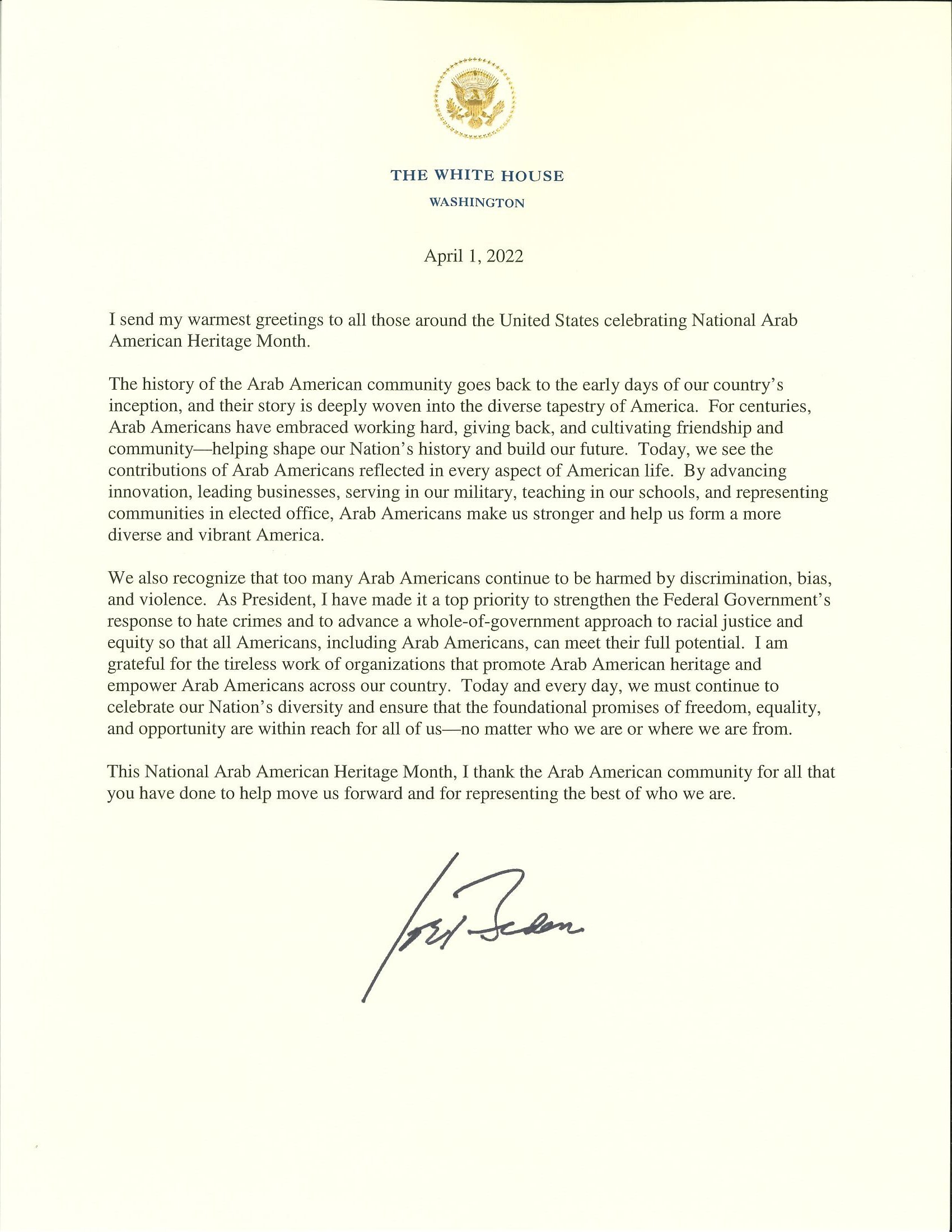
Celebrating Arab Americans in the Law

In recognition of Arab American Heritage Month and the diverse national and cultural identity groups that comprise the Arab American community, today’s blog post will focus on Arab Americans in the law. Specifically, we will highlight the recently formed National Arab American Bar Association (NAABA), which according to one of its founders, Ryan J. Suto, aims to empower Arab American legal professionals.

NAABA’s three objectives are to “(1) support the professional growth and advancement of Arab American lawyers, (2) cultivate an understanding of the legal challenges facing Arab Americans, and (3) serve Arab American communities nationwide.” By advancing these aims, NAABA seeks to achieve a number of corresponding goals, including the creation of “a coherent pipeline of community leaders from law school to the federal bench and every legal path in between,” as well as the defense of democracy, and the empowerment of Arab Americans, including attorneys.

Offering opportunities for professional development and volunteerism and doing so by building on existing resources at the national, local, and personal levels, NAABA will – and already has – fostered connections and community for both seasoned legal professionals and those just entering the field.

NAABA creates space for a group of Americans who have, until recently, been under-recognized in the legal arena. With the celebration, every April, of National Arab American Heritage Month, this community of rich cultures and histories – linked together by unifying traditions, yet distinct in many remarkable ways — will be celebrated, not only for achievements in the legal profession, but for contributions to all aspects of American society, in Houston, in Texas, and in the nation.  

For additional reading about Arab American history, culture, and traditions, please visit the links below:


from Texas Bar Today https://ift.tt/5bBUuzw
via Abogado Aly Website

What's different in a law enforcement divorce?

Law enforcement officers and their spouses who go through a divorce tend to have different experiences than most of the public. Not only are divorces very unique matters for each family that goes through the process, but law enforcement officers have specific circumstances that impact their lives more acutely than others. One of the most unique ways that a divorce for law enforcement officers impacts their lives is regarding child custody. Raising a child as a law enforcement officer or law enforcement officer spouse is difficult enough as it is. The process of divorcing while being in a law enforcement family is about as difficult as it gets.

Additionally, the pension rules associated with divorcing a police officer also need to be mentioned. As a law enforcement officer, you took an oath to serve your community. That service does not come at zero cost to you. You put your life on the line each day in performing the daily activities that are a part of your job. Serving the community in a law enforcement capacity also impacts your family law. Having a job with an atypical schedule means that you may not be able to see your kids as often as you would like. It could be that your marriage has suffered as a result of your career path. 

When it comes to being a law enforcement officer one of the major perks of the job is that you can earn and build a pension throughout your working life. Your pension is something that is contributed automatically and may be impacted by years of service, your base rate of pay, and other factors that are related to your specific role as a law enforcement officer. If you have specific questions about your pension, then you should reach out to your human resources department at work to ask questions. This is the best resource for you to collect information and develop a plan for your retirement. I would recommend doing this regardless of what happens in your divorce. 

Pension division for law enforcement officers and their spouses

If you are an officer, then you are likely heading into your divorce wanting to protect your pension as much as possible. On the other hand, if you are an officer’s spouse then you may be concerned about your ability to retire. Either way, the pension is an important part of a divorce for those families who are in law enforcement. Here is some important information for you to consider as you begin the divorce process. 

Texas, as you may know, is a community property state. This means that the property that you own at the time of your marriage is presumed to be marital property and thus divisible by a family court judge. This is a big difference between how Texas treats property and how other states treat marital property. In most other states the spouse who purchases the property earns more income, or otherwise contributes more financially to the marriage and can retain more of the property. 

Not so much in Texas. Texas presumes that not only is all property owned between you and your spouse to be a community in nature but that it doesn’t matter who contributed more economically when it comes to the two of you. Your spouse could have been a stay-at-home spouse or parent and never have worked a day in their life and now be on the same footing as you financially. Let that sink in for a moment or two. 

But wait. Before you kick the bedpost in frustration why not look at this situation from the perspective of your spouse. Even if he or she never worked a day in your marriage outside of the home it’s not that their economic contribution was zero. Cooking, cleaning, childcare, transportation, appointment setting, home maintenance, etc. If not for your spouse, you may have had to pay people to perform these services for you. Paying people costs money if you weren’t aware. Therefore, I have it on pretty good authority that you would not be in a much better position than you are not but for this community property assumption. 

When we talk about community property, we do not just mean the tangible property that you see around your house. Your vehicles, the house itself, your silverware, and the video game system in the game room. These are types of property, to be sure. However, when we talk about property in the context of a Texas divorce case, we are also discussing intangible property. Savings accounts, checking accounts, and retirement accounts are just a few of the intangible assets that are counted as community property. Your pension is a type of community property if you accumulated and contributed to the account during the length of your marriage. 

The default setting for a family court judge would be to split your community property right down the middle. However, let’s examine some important caveats to this assumption. First, there are almost always external factors that weigh on a judge when determining how community property would be divided. One of the great things about working with an experienced family law attorney is that we can help you identify those factors and plan for them- whether they work in your favor or not. Contact the Law Office of Bryan Fagan today to learn more about the services that we can provide to you as a client of ours.

First, the judge would consider fault on your part or that of your spouse when it came to the breakup of your marriage. In Texas, as in every other state, you can obtain a divorce for no reason. Discord or conflict in personalities, irreconcilable differences, and incompatibility are just a few of the euphemisms we give to people who simply no longer want to be married. This is otherwise known as a “no-fault” divorce. You and your spouse are not placing any blame on the other when it came to your divorce. You simply no longer could tolerate being married and are getting a divorce. 

On the other hand, Texas allows for you, your spouse, or both of you to assert fault grounds when it comes to a divorce. These fault grounds include things like adultery, abandonment, and cruel treatment. Not only would you need to allege one of these fault grounds, but you would need to provide specific evidence to a family court judge to substantiate the allegation. If you can do so then you can reap some benefits from having done so.

What sort of benefit, you may be asking? When it comes to your property division being able to prove that your spouse contributed enough to substantiate a fault ground for divorce means that you could be in line to receive a disproportionate share of your community estate when the case is all said and done. Disproportionate means more than half. Since you were an “innocent” spouse you would be rewarded for your innocence, to put it another way. This is an important point to make and can make the property division aspect of your case much different than simply saying that a judge would split your property right down the middle. 

The amount of community property in play can also impact issues like who gets to keep the house after the divorce and whether spousal maintenance will be ordered. Keep in mind also that you and your spouse are likely to be the people who determine how your community property is divided and not a judge. Therefore, the two of you can begin to throw out settlement offers from the beginning of your divorce to work through these types of issues. No use waiting until your case is over with to leave it all up to a judge. Work through these issues as best you can and only rely upon the judge if it becomes clear that this is your only option. 

Community property and your pension

The idea that all property earned during your marriage will be classified as community property and thus divided evenly sounds nice on paper but doesn’t exactly come out that way in the real world. Rather, we have already seen that external factors can play a role in this process. In addition to concepts like fault grounds for divorce, there are other issues in play when it comes to how your property will be divided in a divorce. 

Let’s consider the subject of commingling. When you and your spouse mix community property with the separate property you have commingled property. For example, if you deposit money earned during your marriage into a savings account that you had before you married then you have a potential situation for commingling of property. The money that you earned and deposited into the account before your marriage would be separate property and is not divisible. 

The tricky part for you, your spouse, and potentially a family court judge is determining which portion of the account is separate property and which portion is community property. When you have mixed money up in an account it can be tricky to go back and decide on which is separate, and which is community. It may be that you can simply go back and look through your account to look at when you got married and how much money was in the account on that date. This would be separate property. Any money deposited after that date would be a community. You may have to consider interest rates on the account and the growth inside the account, as well. 

However, this assumes that you can log into your online account and look back many years to determine all this. What if you are in a situation where online records aren’t as easily located? What if you don’t do online banking and instead rely upon the statements mailed to you by the bank? I know this sounds far-fetched to some of you, but many people still bank this way. What then? How could you ever feel confident about making this sort of determination? In that case, you would likely need to hire a forensic accountant to make the call for you. 

This same general principle could also apply to your pension. It may be the case that you were working as a law enforcement officer before you got married. In that case, you would need to figure out how much of your pension is separate property and how much of it is community property. There is a ratio that is applied to your pension based on the total number of years that the two of you were married and the number of years that you earned a pension. 

Here is an illustration of that ratio using round numbers. Suppose that you and your wife were married for 10 years and you earned your pension for the past 15. That means that 10/15 or 66.6666% percent of your pension is community property. That percentage would then be applied to the dollar value of your pension and monthly payment would then need to be calculated. Pensions do not act like 401(K)s or IRAs. Rather, pensions do not allow you to pick the funds that they are invested in. You contribute to your pension and a plan administrator or fund manager chooses the investments. When you become vested in your pension after serving your law enforcement body for a certain period then you would be able to receive a specific sum of money each month at retirement. Typically, as you get older and more experienced within the law enforcement body you would be able to take home more money per month at retirement. 

How can you keep as much of your pension as possible in a divorce?

When it comes to a divorce case you are playing defense if you are the spouse who has the pension. All that money is technically in your name. However, the law in Texas can divide up that property even if the account doesn’t mention your spouse’s name. The same can be said for your house, vehicles, or anything else you own for that matter. If you are trying to quickly switch the names of various documents into your own so that you can keep the property after a divorce, then you can put that dream to rest. It won’t matter, and the court won’t like that you did it (and neither will your spouse). 

As we mentioned earlier, you and your spouse will have ample opportunity to divide up your pension and all community property in mediation or other informal settlement negotiations. Here is some food for thought when it comes to negotiating on this subject. This is general information and should not be taken to apply specifically to your divorce. The best way for you to obtain specific advice about your case is to work with an attorney with the Law Office of Bryan Fagan. In that case, you can be sure that one of our lawyers is doing the work necessary to give you specific advice based on you and your interests. 

If you and your spouse both have retirement accounts, then you may agree for both of you to simply keep what you have in your name and move along your ways. This works well if those retirement accounts are equal in value or close to it. If you have a pension and your spouse has a 401(K) then you probably will need to do some planning as far as comparing the two types of retirement vehicles. It’s a bit like comparing apples to oranges. 

Next, you and your spouse could make a trade offer. Suppose that, for whatever reason, your spouse wants a portion of your pension. You may be willing to trade that portion of your pension (over and above the community property share) for another asset. Maybe you own a small vacation cottage on Lake Conroe that you want to keep for recreation/fun? If that cottage’s value is equal to the portion of the pension in question, then that may be a deal that you want to pursue. 

Finally, you could offer your spouse a spousal beneficiary election on your pension in exchange for a higher percentage of the account. This would work out for your spouse if, sadly, you were to pass away. Rather than name one of your kids or a future spouse as the beneficiary then your ex-spouse would get the pension. This sounds like a risky move, depending on your circumstances. However, if you have nobody else in your life you would like to insert as a beneficiary after the divorce it may work out and make some sense. 

Questions about the material contained in today’s blog post? Contact the Law Office of Bryan Fagan

If you have any questions about the material contained in today’s blog post, please do not hesitate to contact the Law Office of Bryan Fagan. Our licensed family law attorneys offer free of charge consultations six days a week in person, over the phone, and via video. These consultations are a great way for you to learn more about law enforcement divorce situations but also about how your family may be impacted by the filing of a divorce or child custody case. 


from Texas Bar Today https://ift.tt/0HTC1nD
via Abogado Aly Website