Monday, July 1, 2019

What Business Owners Can Learn From the Dish-HBO Contract Fight

Originally published by Christopher Stevenson.

With many popular shows popping up in time for summer, like the final season of Game of Thrones, Big Little Lies, and many more, it’s no surprise die-hard fans want to ensure they have options available for viewing. Unfortunately, many Dish customers were especially concerned about their ability to view these programs, as the company has been involved in a contract dispute with HBO for many months. While situations like this can be frustrating for fans, business owners can learn quite a bit from how corporations handle conflict.

The post What Business Owners Can Learn From the Dish-HBO Contract Fight appeared first on Adair.

Curated by Texas Bar Today. Follow us on Twitter @texasbartoday.


from Texas Bar Today https://ift.tt/2FLqxge
via Abogado Aly Website

New Texas Law Aimed at Porch Pirates Makes Stealing Mail a Felony

Originally published by Priyanka Kasnavia.

Stealing Packages is Now a Felony in Texas Beginning September 1, 2019, anyone convicted for stealing mail in Texas could face felony charges. Partly due to the rise of online shopping, Governor Greg Abbott signed House Bill 37 to prevent “porch pirates” from stealing mail left out in the open. The bill defines mail as […]

The post New Texas Law Aimed at Porch Pirates Makes Stealing Mail a Felony appeared first on .

Curated by Texas Bar Today. Follow us on Twitter @texasbartoday.


from Texas Bar Today https://ift.tt/3096iRv
via Abogado Aly Website

Business Interruption: Strategies for Resolution

Originally published by Iris Kuhn.

A business interruption claim does not always end up in litigation. There are basic techniques that an insured may consider expediting and presenting a claim that may result in a fair resolution of a business interruption claim. The Business Interruption Book: Coverage, Claims, and Recovery,1 is a great source for information on business interruption issues…… Continue Reading

.

Curated by Texas Bar Today. Follow us on Twitter @texasbartoday.


from Texas Bar Today https://ift.tt/303WyYI
via Abogado Aly Website

Barbara Technologies Corporation v. State Farm Lloyds

Originally published by Jeff Raizner.

On Friday, June 28, 2019, The Texas Supreme Court issued an important decision in Barbara Technologies Corporation v. State Farm Lloyds, No. 17-0640. We are honored to represent Barbara Technologies and provide this brief summary of the opinion.

The Court’s opinion was measured, and it provides much needed clarification on the potential viability of a claim for statutory penalties under the Texas Prompt Payment of Claims Act, Tex. Ins. Code. Ch. 542 (the “TPPCA”) when an insurer rejects a claim and then subsequently invokes appraisal and pays the award. This is not a one-sided opinion for policyholders, nor does the decision “hobble” or “bury” appraisals as Justice Hecht’s dissent suggests. Instead, the opinion takes significant but cautious steps toward restoring a measure of balance in appraisal law – with the TPPCA resuming its critical role as traffic cop at the intersection of appraisal and litigation.

Appraisal Payments Do Not Absolve Insurers of TPPCA Liability

The most significant aspect of the opinion is the Court’s holding that payment of an appraisal award does not, as a matter of law, absolve an insurer of liability under the TPPCA. The ‘appraisal as absolution’ argument has over the past handful of years metastasized throughout intermediate court opinions in Texas. Analyzing the Breshears v State Farm Lloyds case line in detail, the court agreed with some of the reasoning, but “caution[ed] that to the extent these opinions could be read to excuse an insurer liable under the policy from having to pay TPPCA damages merely because it tendered payment based on an appraisal award, or to foreclose further proceedings to determine the insurer’s liability under the policy, we disapprove of these opinions.” The Court focused on statutory language; and, in reviewing the text of Chapter 542 at a granular level the majority explained there is no exception or extension to TPPCA prompt payment deadlines for appraisal.

Appraisal Payments Do Not Automatically Subject Insurers to TPPCA Liability

The Court rejected our argument that when an insurer pays an appraisal award, it necessarily accepts liability on the claim and pays the policy benefits as actual damages such that it is strictly liable for statutory penalties under the TPPCA. Instead, the Court concluded, “that payment of an appraisal award on a rejected claim does not subject the insurer to prompt pay damages under Section 542.060 unless and until the insurer either accepts liability under the policy or is adjudicated liable.”

The majority sought a middle ground between our position and State Farm’s, by rejecting the core arguments offered by both sides: “We hold that the invocation of the contractual appraisal provision to resolve a dispute as to a claim rejected in accordance with the TPPCA’s procedural requirement neither subjects an insurer to TPPCA damages nor insulates the insurer from TPPCA damages.” The Court declined to pick winners and losers in the appraisal process, and instead established a framework by which parties must obtain a ruling from a court or arbitration tribunal regarding the liability of an insurer for TPPCA damages after an appraisal award, at least for claims arising under Section 542.060.

Justice Boyd issued a concurring and dissenting opinion, and agreed with our position that “by voluntarily and unconditionally paying the benefits claimed, the insurer conceded both its liability and the claim’s validity.” Justice Hecht’s dissent, joined by Justices Brown and Blacklock, took an opposing view, concluding the 60-day time period contained in Section 542.058 does not commence until the amount of the claim is determined during the appraisal process.

What Remains Ahead

We intend to provide a more comprehensive analysis of the opinion in the coming days. In the interim, some may misinterpret the decision. And to be sure, insurance industry advocates will beat the drums of hyperbole and prophesize about the demise of appraisal or a groundswell of lawsuits. While the impact of this decision will be significant, it will not open the floodgates of litigation. But perhaps, Barbara Technologies will, in some circumstances, reopen the courthouse doors that have been closed for years to the resolution of TPPCA claims after an appraisal award, provided there is a demonstrable TPPCA violation on a claim for which the insurer is liable.

Many thanks to our appellate co-counsel Rick Thompson, Kirk Pittard, and Thad Spalding (and Justice Peter Kelly in absentia) at Durham, Pittard & Spalding for their outstanding work on the appeal. One thing we know for certain, State Farm and the insurance industry have more to say on the subject, and we can expect a motion for rehearing. Check back on our blog, as we will provide a more comprehensive analysis of the opinion in the coming days.

The post Barbara Technologies Corporation v. State Farm Lloyds appeared first on Raizner Slania LLP.

Curated by Texas Bar Today. Follow us on Twitter @texasbartoday.


from Texas Bar Today https://ift.tt/2ZXeVhM
via Abogado Aly Website

Attorney General Opinion Sought in Fence Law Issue

Originally published by tiffany.dowell.


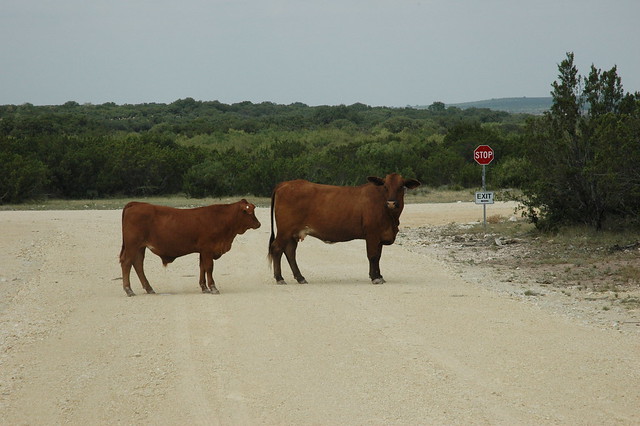
Representative Poncho Nevarez has filed a request for an Attorney General Opinion to provide guidance on how stray livestock should be handled in an open range county. [Read request here.]  This is an issue not previously addressed by a Texas appellate court, on which there is a good deal of confusion, and on which I receive a lot of questions.  It will be very interesting to see what opinion the AG offers.
TAMU AgriLife photo by Steve Byrns

Legal Background

Presidio County, Texas is open range.  The county has never passed a local stock law requiring livestock owners to fence their animals.  Instead, open range law provides that there is no obligation on the part of a livestock owner to prevent animals from running at large in Presidio County.  On the contrary, it is the responsibility of a neighboring landowner to fence animals out. Although generally an animal owner may not be liable for livestock at large in an open range county, there are a handful of situations where liability may be imposed.  For example, an animal owner in an open range area can be liable if the landowner intentionally drives the livestock onto the land of another, landowner has knowledge that the animals are diseased, landowner has knowledge that the animals are viscous or breachy, or a situation whereby the neighboring landowner built a fence that complies with Texas Agriculture Code 143.028, yet the  animals still got onto the property.  [For more information on the basics of fence law, click here and go to Chapter 6.]

Texas estray law, found in Texas Agriculture Code Section 142, provides a procedure for dealing with stray livestock on the property of another.  A landowner upon whose property livestock are located must call the sheriff as soon as reasonably practical to report stray livestock.  The sheriff then searches for the owner and may impound the animal if no owner is found within 5 days.  The sheriff must then post notice of the animals in various ways and, eventually, if not owner is found, the sheriff is authorized to sell the animals at public auction.  [To read more about the estray law, click here.]

Factual Background

In Presidio County, the County Sheriff believes it is the responsibility of the sheriff’s office to handle stray livestock by virtue the Texas estray law.  The County Attorney has issued a legal opinion that the estray laws do not apply in an open range county.  Judge Dan Mills, an advisor for the sheriff’s association of Texas, agreed with the County Attorney.  John Fowlkes, the former County Attorney, interpreted the law in the same was as the Sheriff’s office and believes that the estray laws do apply in an open range county.  In light of this disagreement, Representative Mills seeks an opinion from the Texas Attorney General on the answer to this question.

My Thoughts

First, many people may not have heard of an AG opinion before.  Keep in mind that courts cannot speculate on how the law should work or what they would do in a case that is not before them.  In other words, courts can only rule on the facts that are brought to them in a case.  Sometimes, there are legal questions that arise that courts have not spoken to, such as this one.  The AG can issue an opinion interpreting existing law, basically stating how he or she thinks a court would interpret certain legal provisions.  The AG opinion is not binding on a court in the future–the court can rule how it sees fit–but does provide guidance for people with questions about the law.

Second, I find it helpful to consider estray laws a procedure by which livestock are removed from the land of another.  It strikes me that there could be situations, even in an open range area, where that procedure could be necessary.  So while I do not think that it would be correct to say that the estray law can never apply in an open range county, I also do think that estray law can always apply in an open range county such that the estray law, itself, would essentially convert an open range county to a closed range county.  The estray law focuses on how to remove stray livestock from property of another, and nothing in the provisions provides any limitation on their applicability throughout the state.  In other words, nothing in the statute says it applies only in a closed range county.  A blanket prohibition on the estray law in an open range county would allow no recourse for a landowner–even one who might have built a sufficient fence but animals continue to get in the property–to have the animals removed from his or her land. Also, as noted above, there are already common law limitations on the concept of open range, such as a landowner may not let diseased animals roam free and may not intentionally drive cattle onto the land of another.  It appears that, at least to some extent, the estray law could be necessary to enforce these existing limitations on the open range rights of landowners.

For example, in a situation where a neighboring landowner in an open range county has no fence and does nothing to prevent the animal from entering his or her property, that may be a situation where estray laws should not apply, as they would essentially convert the rule from open to closed range by forcing the livestock owner to fence animals in.  However, in circumstances where a neighboring landowner might have a fence that meets the statutory sufficiency standards, yet on whom another’s livestock continually enter, the estray laws potentially should allow a remedy for that landowner.

Why do we care?

The answer to this question will have impacts far beyond Presidio County.  There are a number of Texas counties that remain open range for some or all species that could be impacted by the outcome of this request for opinion.  For livestock and landowners in those counties, this could greatly impact their rights and responsibilities.


The post Attorney General Opinion Sought in Fence Law Issue appeared first on Texas Agriculture Law.

Curated by Texas Bar Today. Follow us on Twitter @texasbartoday.


from Texas Bar Today https://ift.tt/2J3eNaW
via Abogado Aly Website

Investment contracts might not be securities. Really.

Originally published by David Coale.

The Fifth Circuit revised its original opinion in SEC v. Arcturus Corp., reaching the same result (reversal of a summary judgment for the SEC about whether certain investment contracts were securities), while adding significant factual and legal detail about the sophistication of the relevant investors – the issue on which the Court found summary judgment to have been inappropriate. SEC v. Arcturus Corp. (revised), No. 17-10503.

Curated by Texas Bar Today. Follow us on Twitter @texasbartoday.


from Texas Bar Today https://ift.tt/2NoWqkS
via Abogado Aly Website

Friday, June 28, 2019

Top 10 from Texas Bar Today: The Golden Goose, a Holographic Will, and Mistaken Indemnity

Originally published by Joanna Herzik.

10. New Wave of Pension Plan Litigation – Sharon Fountain, Russell Gully, Jason Loden, Jessica Morrison, and Neely Munnerlyn of Thompson & Knight LLP @ThompsonKnight in Dallas

9. No Fax Required – D. Todd Smith of Smith Law Group LLLP @dtoddsmith in Austin

8. When Your Trademark Gets Opposed — Part 1 – James Creedon of Creedon PLLC @CreedonPllc in Frisco

7. Property Rights and Oil/Gas Exploration in Texas – C. William Smalling of The Law Office of C. William Smalling, P.C. in Houston

6. SCOTUS Hears Case Regarding Punitive Damages in Maritime Injury Cases – Scott C. Krist of the Krist Law Firm in Houston

5. Arbitrator’s Evident Partiality in Texas Divorce Case – of McClure Law Group @McClureLaw in Dallas

4. What is a Holographic Will? – Law Office of Carey Thompson, PC in Fort Worth

3. The Case of Mistaken Indemnity, Part 2 – Drew York of Gray Reed & McGraw @GrayReedLaw in Dallas and Houston

2. Texas Supreme Court Upholds Condemnation of Private Drive – Tiffany Dowell Lashmet @TiffDowell, Assistant Professor and Extension Specialist in Agricultural Law with Texas A&M Agrilife Extension in College Station

1. Can the Golden Goose and Its Eggs Be Shared: Resolving Conflicts Between Private Company Co-Founders – Winstead PC @WinsteadPC

Curated by Texas Bar Today. Follow us on Twitter @texasbartoday.


from Texas Bar Today https://ift.tt/2NkMIzW
via Abogado Aly Website